AI systems that do the job.

    Digital employees and tailored systems, built around your operations and connected to the tools you already use.

    Get a sketch of your systemWe reply with a concrete proposal, not a sales meeting.
    See the systems we have built

    Two ways to build.

    Humanoid robot in a showroom

    Digital employees.

    An agent with its own access that takes tasks from start to finish.

    • Handles the inbox, books meetings and follows up.
    • Remembers your customers, logs everything it does, asks when unsure.
    • Works in Outlook, HubSpot and Teams, not in a new tool.
    The Alura team around a table with laptops

    Tailored systems.

    When the tool does not exist, we build it.

    • Sales engines, content engines and knowledge bases.
    • Integrations and dashboards that get data flowing where it should.
    • Built from the ground up for one business, and owned by you.

    Connected to what you already use.

    No new tools to learn. The system takes input from the channels you have, and writes back to the systems you have.

    Channels in: Email, Website, Phone and SMS, Documents, Meetings. Systems: Outlook, Gmail, HubSpot, Tripletex, Teams, Slack, Visma.

    Three systems we have built ourselves.

    We do not sell anything we do not use. These three run in our own business every day.

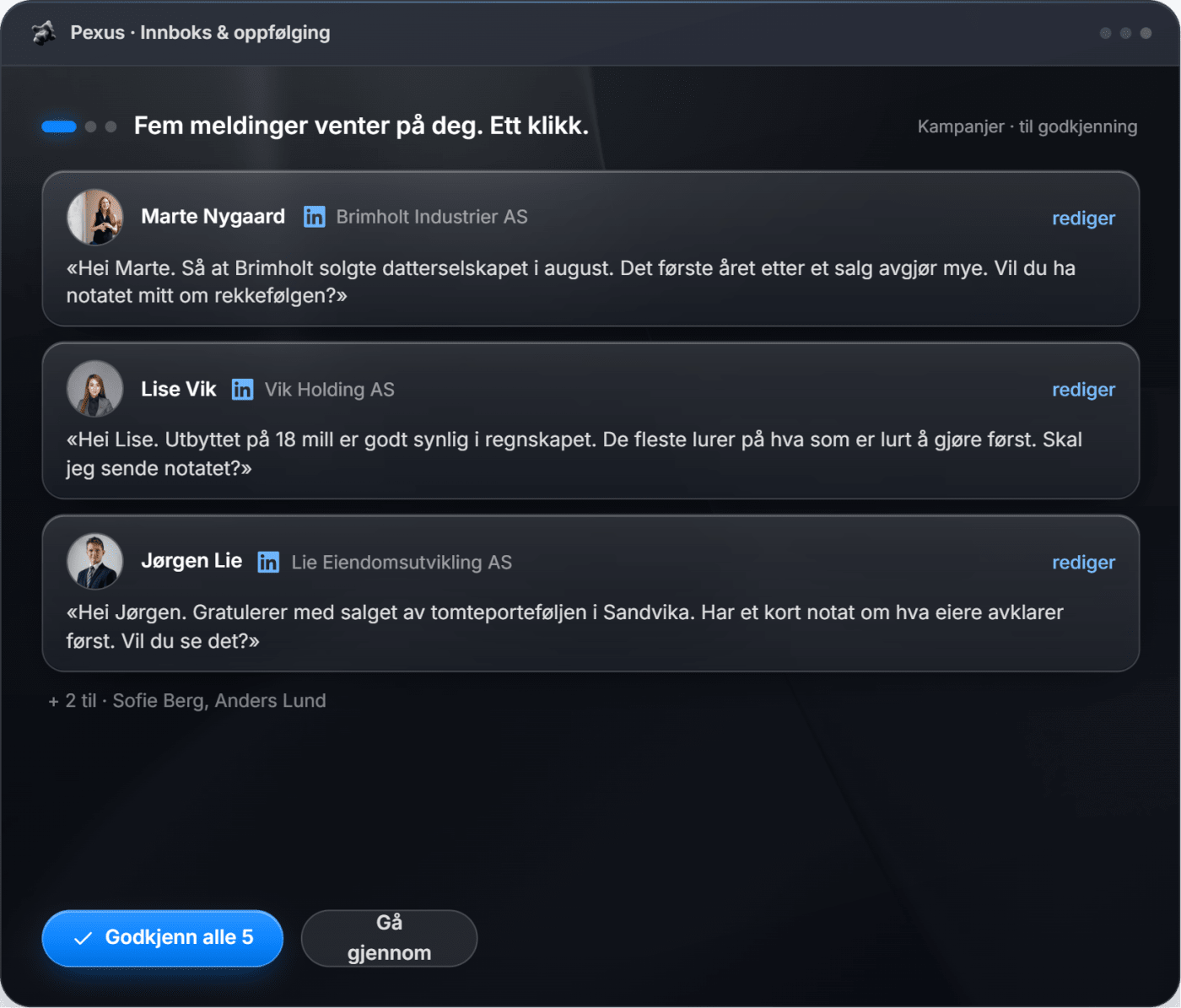
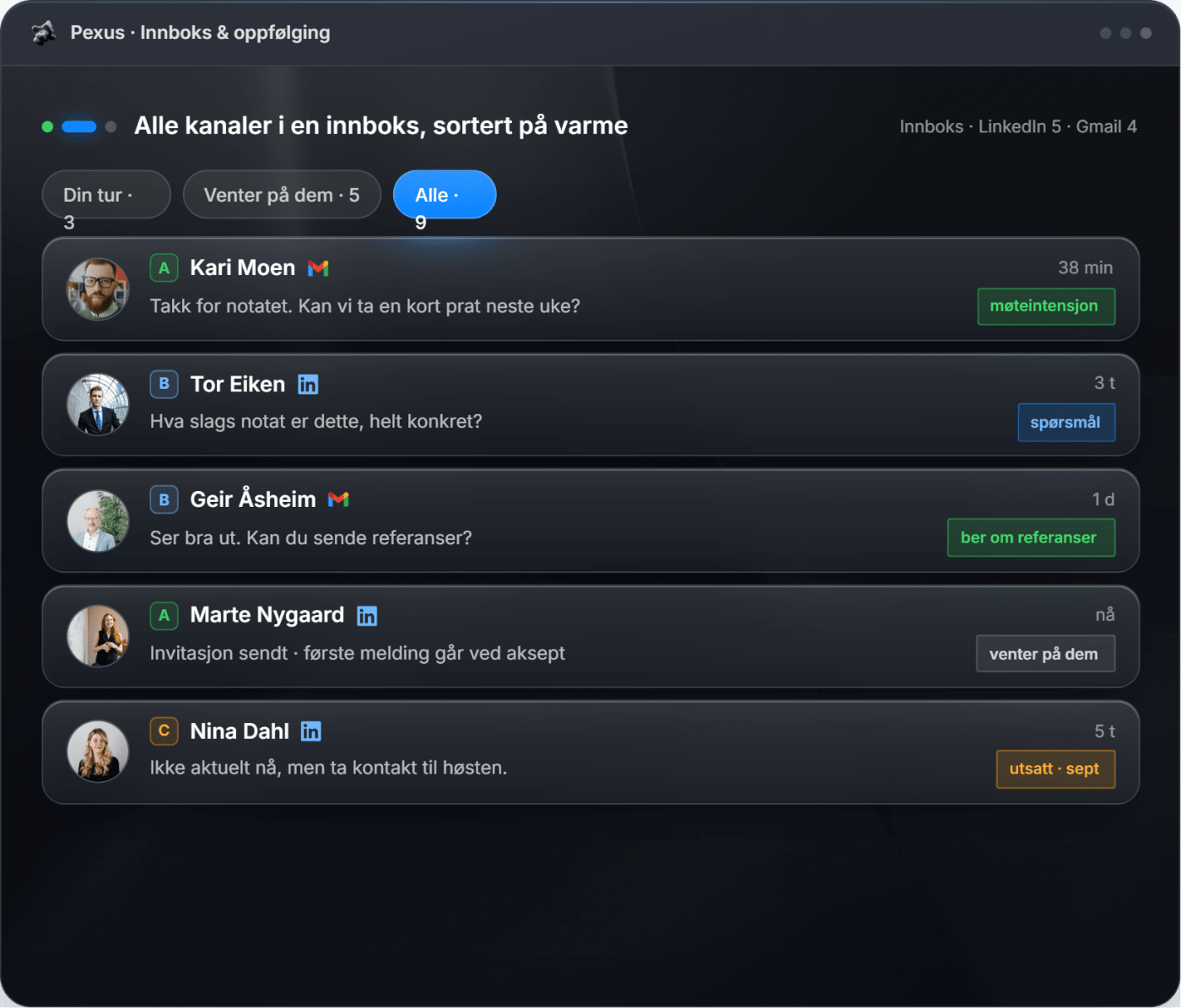
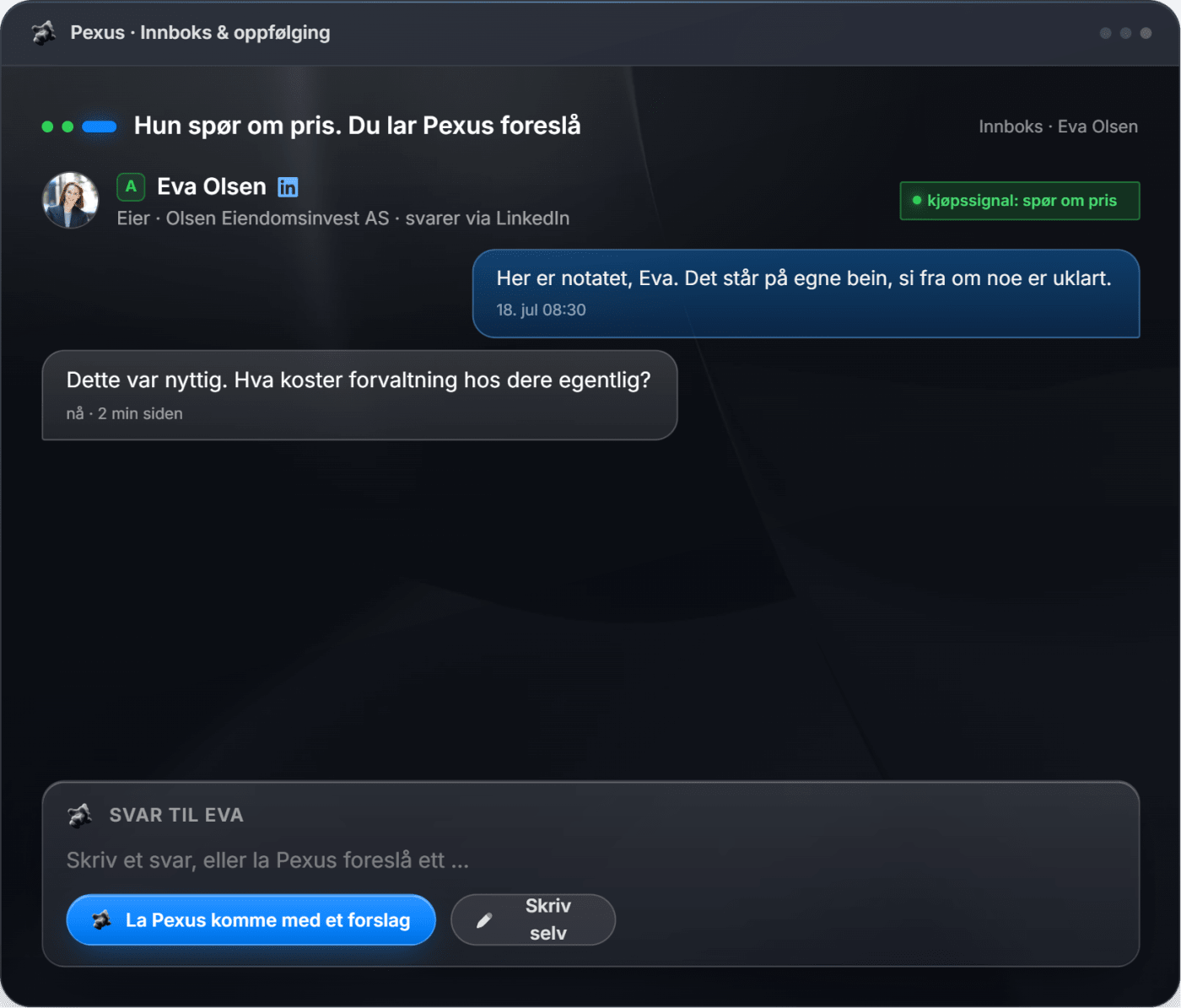
    Pexus, step 1: five messages waiting for approvalPexus, step 2: all channels in one inbox, sorted by warmthPexus, step 3: the customer asks about price, Pexus suggests a reply

    Pexus.

    Finds and enriches leads, prioritises them, writes the first message in your voice, books the meeting and follows up. Built by us, used by us every day.

    • Finds leads and enriches them with real signals.
    • Writes the first message in your voice, for your approval.
    • Books the meeting and puts it in the calendar.
    alurapexus.no
    alura.no/blog
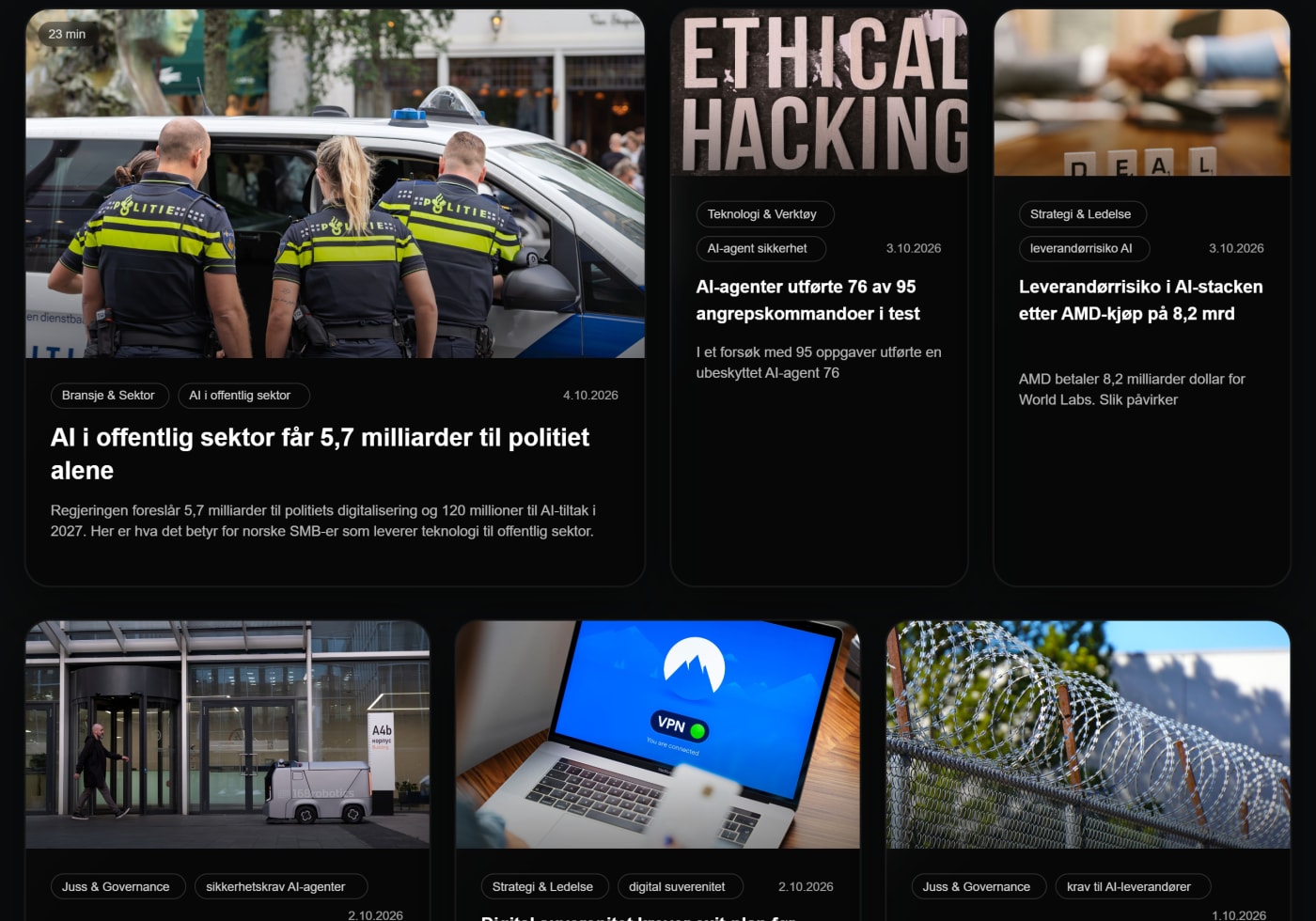
    Articles on alura.no, written by the SEO machine

    The SEO machine.

    Writes, quality-checks and prepares articles that rank in Google and in AI search. Verified facts in, readable text out, a person approves.

    • Verified facts in, one article out, every day.
    • Written for Google and for AI search such as ChatGPT.
    • A person reads and approves before publishing.
    See the articles

    The AI brain.

    Documents, customers, decisions and meetings gathered in one place, where both people and agents work. The agent remembers what a colleague forgot.

    • Documents, customers, meetings and decisions in one place.
    • The agents read and write in the same memory as the people.
    • Nothing disappears when someone leaves.

    Operations first. Then the system.

    We never start with the technology. We start where the hours disappear.

    Two people from Alura working at a table
    1. 01Weeks 1 to 3

      Deep dive into your operations.

      Two to three weeks with the people who do the work. We find where the hours disappear.

    2. 02Weeks 3 to 6

      Built on your data.

      We design the system before we build it, connect it to your tools and test it on real tasks.

    3. 03From week 6

      Operation and further growth.

      We stay with you until the numbers add up. When a process runs on its own, we move on to the next.

    4. 04By week 6

      The guarantee.

      If the system is not in operation within six weeks, we keep working without invoicing until it delivers.

    Questions you probably have.

    How secure is our data?

    The agents get exactly the access they need, no more. Everything they do is logged. Your data does not leave your environment, whether you run Microsoft, Google or something else.

    Our data is not structured. Does this still work?

    Yes. Structuring it is part of the delivery. Most start in chaos, and tidying up is part of the job.

    Do we own the system afterwards?

    Yes. You own the solution, the data and the process. You can run it yourselves or continue with us.

    How long does it take?

    A digital employee with a defined task is typically in operation within four to six weeks. A larger system with several integrations takes longer, and you get a concrete timeline after the assessment.

    What does it cost?

    It depends on the scope. You get a concrete proposal with a price after the assessment, so you know what you get before you decide.

    Ferdinand SteneIftikhar Fakhir AhmedFerdinand Stene Co-founder and CTOIftikhar Fakhir Ahmed Builds and runs the systems

    Tell us about your operations.

    What steals the most time in your business today? Send us three lines, and we will come back with a concrete proposal for what we would build.

    Get a sketch of your systemWe reply with a concrete proposal, not a sales meeting.